
Acellular Allograft Amniotic Membrane in Surgical Reconstruction
Amniotic membrane is one of the longest-used allograft tissues in surgery, valued for its structure and its function as the innermost membrane of the amniotic sac it natively surrounds, contains, and protects, serving as a covering, a protective barrier, and a structural scaffold. Those same basic functions define its use as an allograft.
Clinical Context
That principle carries a specific meaning in the regulation. Homologous use is the repair, reconstruction, or supplementation of a recipient’s tissue with an allograft that performs the same basic function in the recipient as it performed in the donor. Amniotic membrane placed at a surgical site meets that standard directly: it covers, it protects, and it provides a scaffold the very work it does in native anatomy.
Surgeons apply amniotic membrane allografts across specialties on exactly that basis. In ophthalmology, it has long been used in ocular surface repair and reconstruction. In gynecologic and obstetric surgery, it is applied in settings that include vaginal wall repair and pelvic reconstruction. In each, the tissue performs the same homologous function, and the decision to use it belongs entirely to the treating surgeon.
Application Context
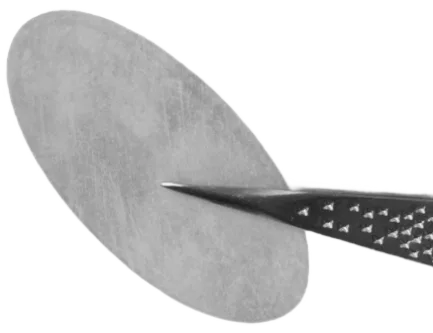
Amniotic membrane is applied much the way its biology suggests. It is laid over or against the tissue plane as a thin, conformable membrane that covers the site, forms a barrier at the surface, and leaves a scaffold behind. A covering placed where the anatomy calls for one.
That one function reaches across gynecological and reconstructive surgery. It is the membrane used in cervical and vaginal reconstruction, including vaginoplasty for vaginal agenesis. It is the graft applied in vaginal wall repair and pelvic reconstruction; it is a tissue used to replace peritoneum after pelvic exenteration and the membrane used to repair fetal membranes themselves, amnion restoring amnion, the most literal homologous use there is. In obstetric surgery, it is the membrane placed at the cesarean incision, covering the uterine and abdominal wall wound, forming a barrier and providing a structural scaffold where the anatomy requires one. Different fields, different anatomy; one basic function carried through every one of them.
Start a Conversation
TISSUE CHARACTERIZATION AND PROCESS VALIDATION DATA AVAILABLE TO QUALIFIED CLINICIANS UPON REQUEST